

Ghost Students, Real Consequences
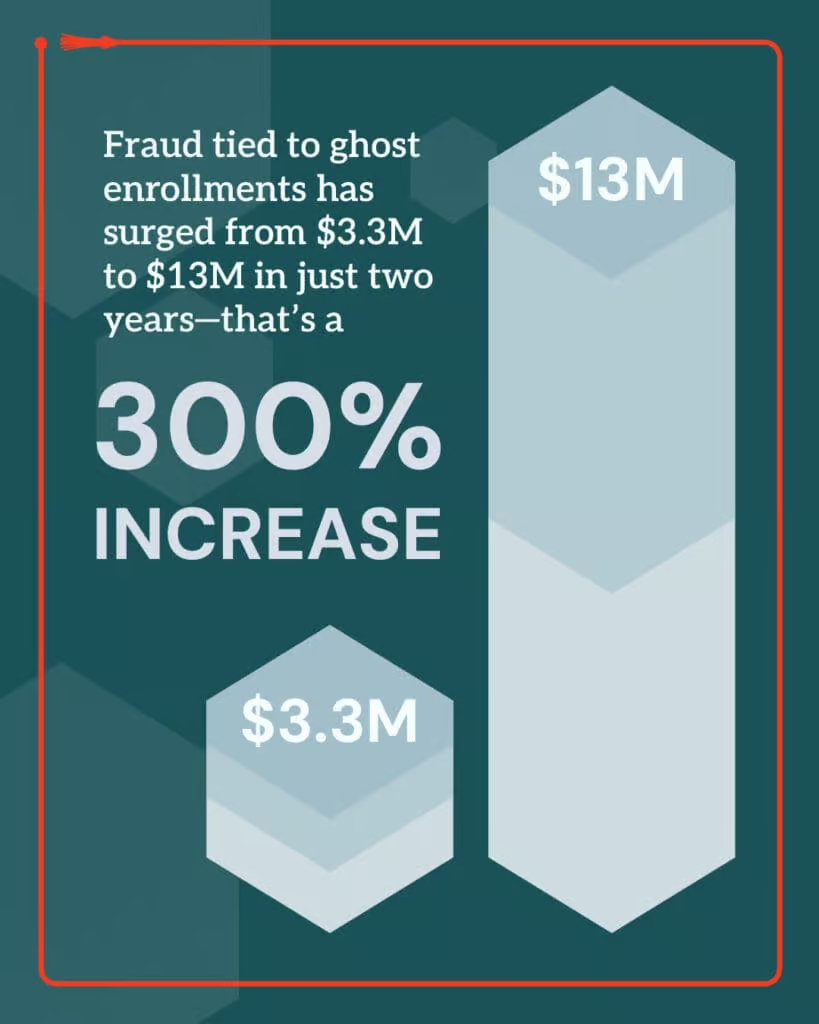
“Ghost students”—AI-generated bots or synthetic identities posing as enrollees—are quietly siphoning millions from college financial aid systems and disrupting classroom operations. The latest report from Industry Insider – California shows just how bad it’s gotten:
Fraud tied to ghost enrollments has surged from $3.3M to $13M in just two years, a 300% increase.
And the impact goes far beyond funding loss. Faculty are being forced to police enrollment. Real students are being shut out of courses. Institutions are scrambling to verify identities without violating student privacy or access.
Read the full article here →
Industry Insider – California, April 2025
This Isn’t Just an IT Problem—It’s a Curriculum Crisis
While most responses to ghost student fraud have focused on identity verification tools (ID.me, Zoom intros, enrollment fees), these tools don’t prevent bots from infiltrating curriculum pipelines in the first place.
Acadea’s point of view:
“The ghost student crisis isn’t just an IT problem. It’s a systemic failure of identity integration and curricular oversight. Institutions must weld identity intelligence to academic planning, enabling institutions to teach real students confidently and restore trust in operations.”
The Five Core Challenges—and How Strategic Academic Operations Solve Them
1. Manual Verification Drains Faculty Time
Instructors are burning hours trying to verify if a student is real, making phone calls, checking emails, reviewing video intros, when they should be teaching.
Acadea’s Response:
Automate verification workflows by surfacing low/no-engagement patterns within curriculum systems. Flag ghost indicators before the term begins or aid is disbursed.
“Your faculty’s time is for teaching.”
2. Bots Block Real Enrollment and Resource Allocation
Ghost students are taking up seats that should go to real learners, creating ripple effects in scheduling, planning, and funding.
Acadea’s Response:
Real-time enrollment tracking and drop-off alerts help identify patterns of fraud and release seats early. Curriculum tools align actual student need with instructional supply.
“Real students get real seats.”
3. Security Tools Alone Aren’t Enough
Bots evolve faster than detection methods. Even advanced tools like facial ID or application flags can be bypassed with generative AI.
Acadea’s Response:
Add a layer of curriculum engagement intelligence; track behavioral and participation anomalies to trigger identity checks based on student actions, not just application data.
“Adaptive systems for adaptive threats.”
4. Compliance Is Changing Fast
The U.S. Department of Education is implementing mandatory in-person or live-video ID verification for Pell Grant recipients starting Fall 2025. California may impose a $10 enrollment fee to fund fraud prevention.
Acadea’s Response:
Be ready before the rush. Seek platforms that support policy-aligned ID verification workflows and configurable approval checkpoints, so compliance isn’t a scramble.
“Future-proof against fall 2025 Pell ID mandates without erecting new barriers.”
5. Verification Shouldn’t Block Access
Traditional identity tools can unintentionally exclude marginalized students—undocumented, incarcerated, or formerly unhoused learners.
Acadea’s Response:
Support equitable, multi-modal verification that respects varied student experiences and protects both access and integrity.
“Security that doesn’t block the vulnerable.”
Strategic Academic Operations: A Smarter Line of Defense
Curriculum management technology doesn’t replace your SIS or identity system. It amplifies them.
By integrating identity signals with curriculum engagement analytics, institutions can:
- Flag potential ghost activity before aid is disbursed
- Empower faculty with intelligent alerts, not manual tasks
- Align enrollment, identity, and program outcomes
- Protect limited classroom resources for real students
- Remain compliant with upcoming state and federal mandates
This is fraud detection at the academic layer—where teaching, enrollment, and funding intersect.
Strategic Resource: Learn More About the Framework
Want to go deeper into how institutions can protect academic integrity, streamline operations, and support policy compliance?
Download our white paper:
Summary Table: Ghost Student Threats vs. Strategic Solutions
| Pain Point | Strategic Response |
|---|---|
| Faculty manually verifying IDs | Curriculum engagement triggers + identity flags |
| Bots evolving faster than tools | Adaptive workflows with AI-resistant behavior tracking |
| Access barriers from ID checks | Multi-modal verification workflows |
| Seat/resource misallocation | Enrollment analytics + real-time drop alerts |
Final Thought
Bots are getting smarter. Your systems should too.
The ghost student crisis is a wake-up call—not just for IT departments, but for academic operations, enrollment officers, and curriculum leaders. Higher education can’t afford to treat fraud detection as a downstream problem.
With curriculum management technology, institutions bring identity, engagement, and operations together so they can teach with confidence, plan with clarity, and protect every seat for a real student.
Stop ghost students before they drain your aid.