
The Promise—and Problem—of California’s Community College ROI
California’s community and career colleges have long been positioned as engines of upward mobility. But according to a first-of-its-kind analysis by College Futures Foundation and The HEA Group, that promise isn’t reaching every student equally.
The Golden Returns report ranks 327 institutions by how quickly their graduates recoup the cost of their education. The metric—called Price-to-Earnings Premium (PEP)—compares net costs with post-graduation earnings premiums over a high school diploma.
The findings are both inspiring and troubling:
- 23 of the top 25 performers are California Community Colleges, with graduates recouping costs in just six months.
- Public institutions dominate: 40% offer ROI in under a year, versus just 5% of private institutions.
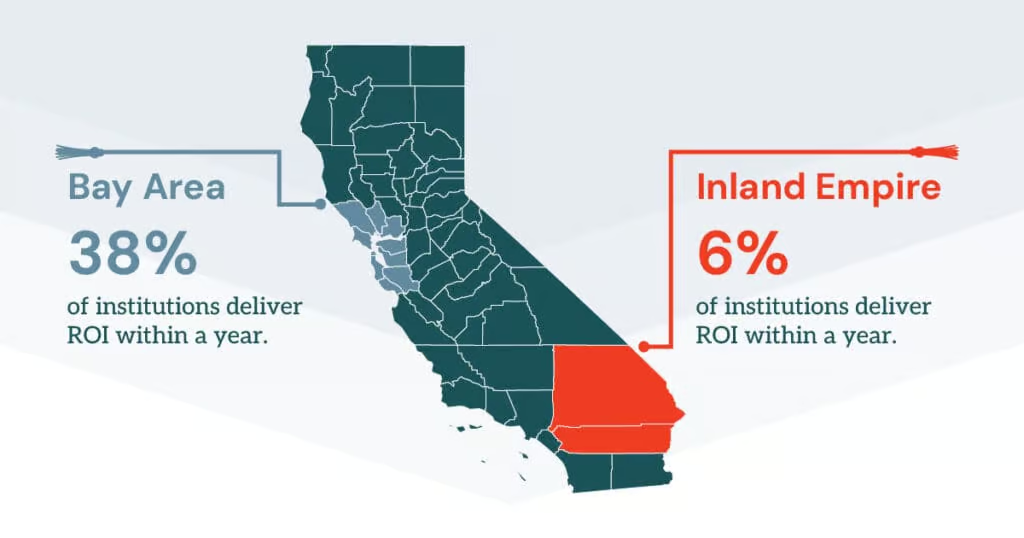
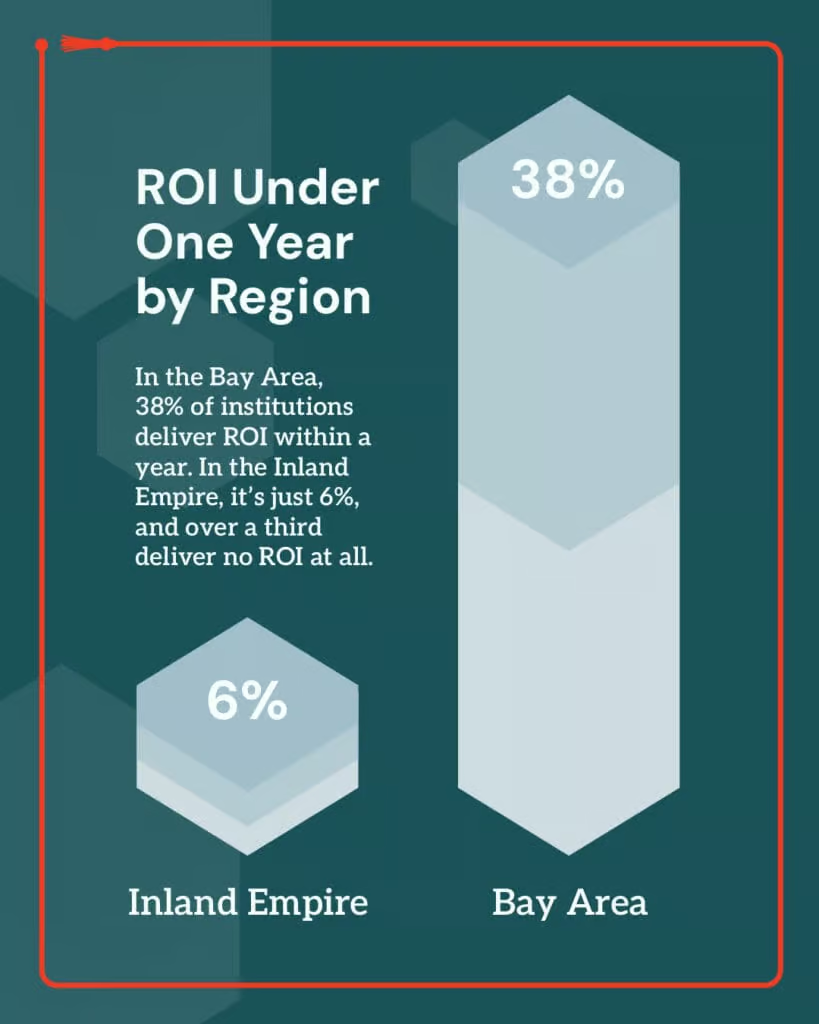
- Geography is destiny: In the Bay Area, 38% of institutions deliver ROI within a year. In the Inland Empire, it’s just 6%, and over a third deliver no ROI at all.
This isn’t just an equity issue. It’s an economic competitiveness problem.
Why This Matters for California’s Future
As College Futures President & CEO Eloy Ortiz Oakley notes, “How institutions absorb this data and apply it to improve value for learners will give them a foundation to build from, especially as accountability takes center stage”.
With the federal government advancing new higher ed accountability frameworks, ROI will increasingly become a public performance measure. California has an opportunity to lead, not just by improving its averages, but by closing its regional ROI gap.
Acadea’s Point of View: ROI is Built in the Curriculum
From our work with 50+ California institutions, one truth stands out: ROI is not just about tuition or wages. It’s about the speed, clarity, and alignment of the curriculum.
When students graduate faster, with credentials that match regional workforce demand, their earnings premium starts sooner, and the ROI clock speeds up.
Here’s how institutions can move the needle:
1. Shorten Time-to-Completion
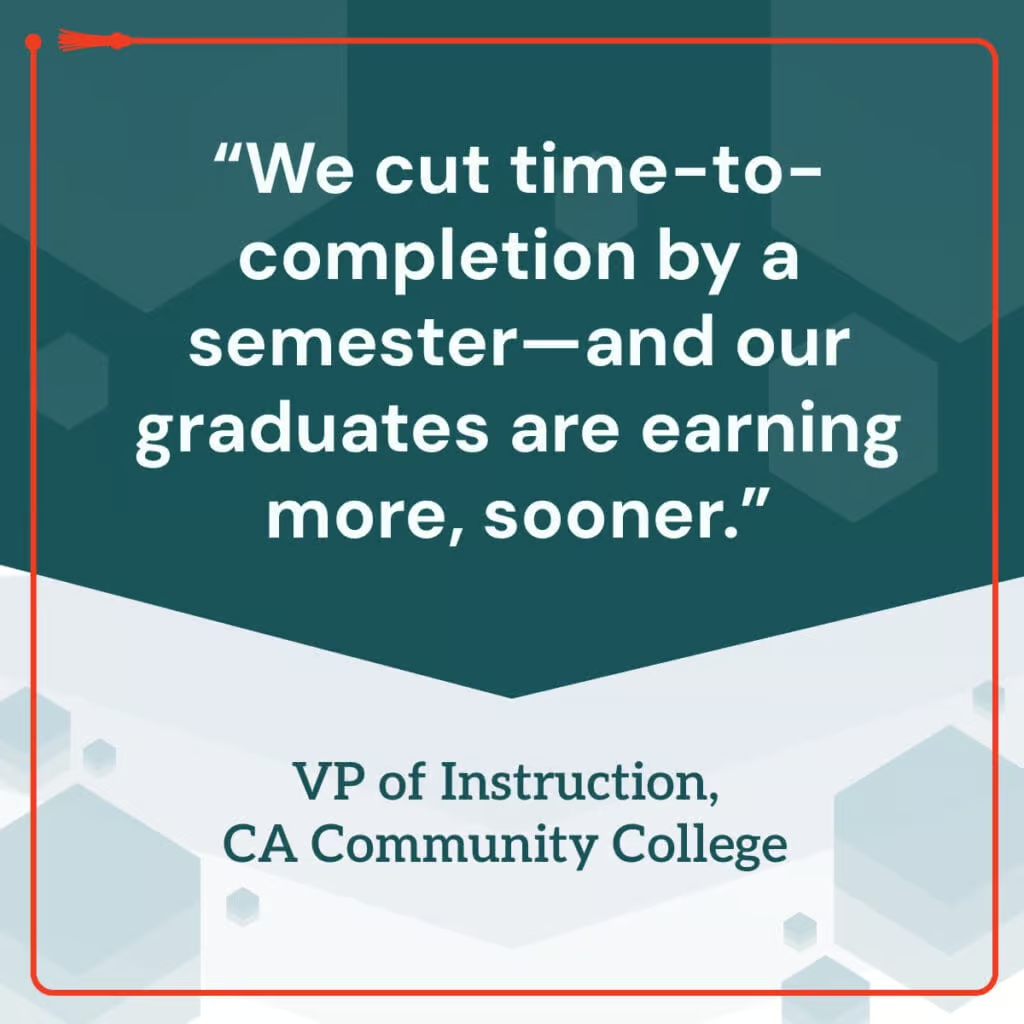
Every extra semester costs students money, both in tuition and lost wages. Streamlined pathways and reduced course redundancy directly improve ROI timelines.
Action: Use curriculum lifecycle tools to spot and eliminate unnecessary prerequisites, overlaps, or detours.
2. Align Programs with Local Labor Markets
The Golden Returns report highlights ROI differences that mirror regional economies. Institutions must match program offerings to high-demand, high-wage jobs in their own backyard.
Action: Integrate regional labor market data into curriculum planning. Build or adapt programs to emerging industry clusters.
3. Boost Transparency in Program Costs and Value
Students need to know the total cost and earnings potential of a program before they start. Many low-ROI institutions suffer from poor visibility into these factors.
Action: Publish clear, public-facing program maps that include estimated completion costs, wage outcomes, and transfer pathways.
4. Invest in Equity-First Program Design
Low-ROI outcomes often cluster in underserved regions. Programs in these areas must be designed for flexibility, accessibility, and support services that match student realities.
Action: Offer stackable credentials, hybrid schedules, and embedded support to reach working adults and first-generation learners.
5. Institutionalize ROI Tracking
The institutions in the top 25 didn’t get there by accident, they’re data-driven. ROI should be monitored annually and embedded into program review cycles.
Action: Adopt platforms that track program-level completion times, cost-to-earnings ratios, and employment outcomes.
The Strategic Academic Operations Connection
ROI improvements require more than policy changes. They require operational transformation.
With Acadea’s Strategic Academic Operations Framework, institutions can:
- Launch or modify programs 30% faster
- Reduce curriculum approval cycles by 70%
- Link every program to labor market and student outcome data
- Maintain audit-ready records for accountability reporting
Learn more in our Strategic Academic Operations White Paper.
Closing the Gap Is California’s Opportunity
The Golden Returns report doesn’t just identify high performers. It lights the way forward. California can become the national leader in community college ROI if every region delivers programs that are:
- Efficient to complete
- Aligned to local workforce needs
- Transparent in cost and value
- Built for equity from the ground up
Institutions already delivering top-tier ROI are proof it’s possible. The question is whether we can make those results the norm, not the exception.