
More Affordable Doesn’t Mean Affordable Enough
Community college has long been positioned as the accessible, affordable option in higher ed. But a new investigation from Houston Landing tells a different story. Across nine Houston-area community colleges, nearly 1 in 5 graduates leave school with student loan debt, and many are borrowing to cover more than just tuition.
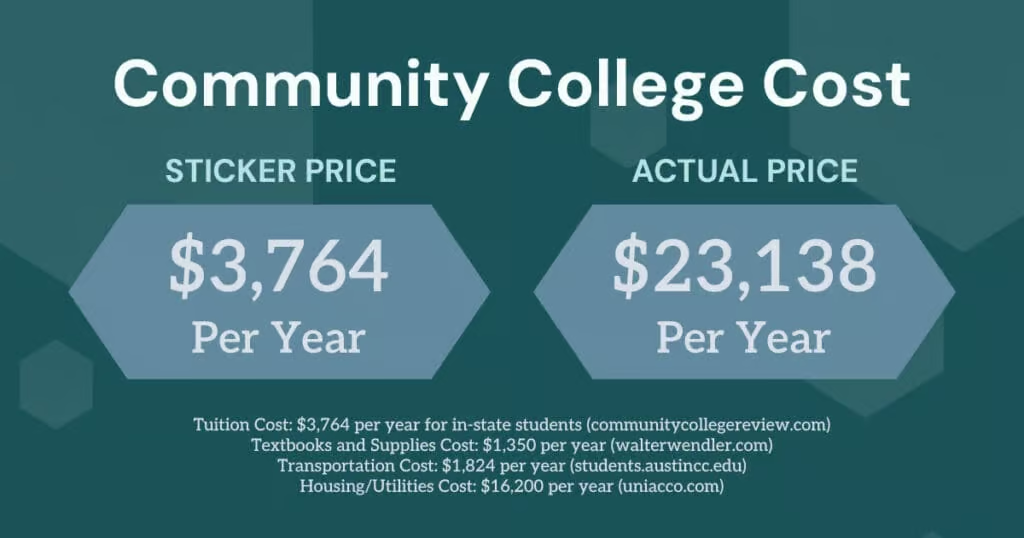
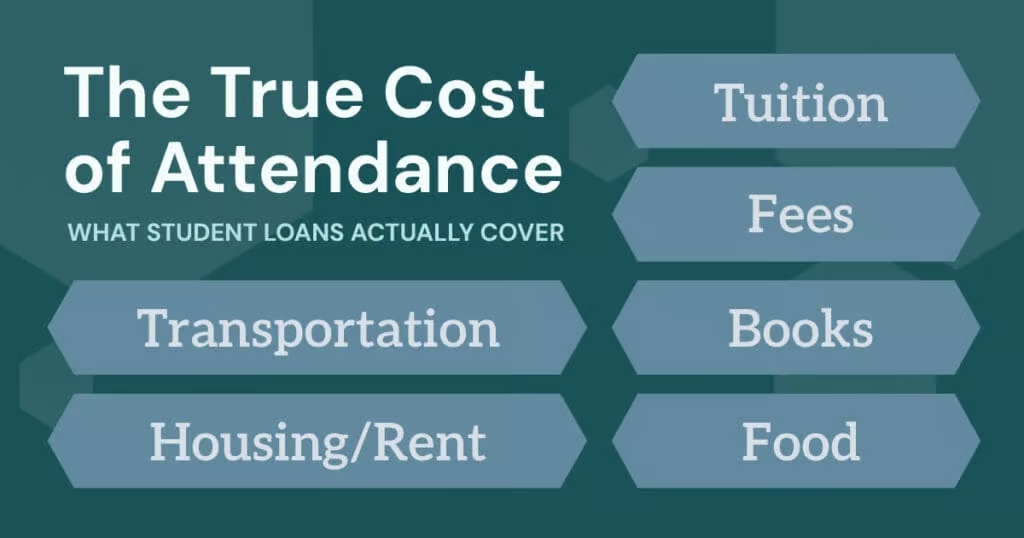
That’s right: even at institutions where yearly tuition averages ~$4,000, the true cost of attendance can quickly spiral, forcing students to borrow for fees, books, materials, and even gas money.
The Real Debt Drivers: It’s Not Just Tuition
Let’s break it down:
- Tuition isn’t the only cost. Many community colleges publish a “sticker price” that doesn’t account for fees, materials, or resource costs tied to individual courses.
- Time = money. The longer it takes to earn a degree, the more likely a student is to take on debt, especially if they’re part-time, working adults, or navigating unclear pathways.
- Course design impacts cost. Inefficient credit stacking, duplicate content, and confusing prerequisites can extend time-to-completion and inflate total expenses.
These compounding factors show up as loans—and not just in the form of tuition checks. As Houston Landing revealed, students are borrowing to stay enrolled, not just to pay for classes.
What This Means for Institutions: A New Lens on Affordability
Affordability isn’t just a number. It’s a system. And curriculum is a huge part of it.
At Acadea, we believe that debt-resilient institutions start with cost-aware curriculum design. That means:
- Mapping every course to the total cost of completion
- Designing clearer, faster, and more efficient degree pathways
- Minimizing unnecessary credits and redundant requirements
- Prioritizing OER and zero-cost material options
- Using real-time data to monitor progress and catch detours early
When institutions take ownership of curriculum strategy, they help students graduate faster, spend less, and borrow less.
Data-Backed Reality: Why This Matters Now
According to the Houston-area data:
- Students at local community colleges pay up to $4,000/year in tuition
- Nearly 19% of graduates still carry debt
- Ancillary costs are pushing students into borrowing more than expected
This is happening in a system designed to be debt-free.
Acadea’s Strategic Response Framework
| Challenge | Strategic Curriculum Solution |
|---|---|
| Hidden & variable course costs | Make cost per credit, materials, and fees visible in the planning stage |
| Extended time-to-degree | Use curriculum lifecycle tracking to streamline pathway progress |
| Student loan dependence | Architect programs that minimize excess credit accumulation and optimize OER usage |
| Unclear program maps | Provide student- and advisor-facing planning tools with real-time accuracy |
| Equity gaps in affordability | Align program design with the needs of working adults, transfer students, and part-time learners |
Acadea’s Point of View:
Affordability isn’t just tuition. It’s every credit, resource, and pathway. Acadea helps institutions architect debt-resilient experiences for community college learners.
With our platform, currIQūnet META, community colleges can:
- Audit curriculum cost drivers across every program
- Align course offerings with real-time student outcomes
- Embed transparency into program design and catalog workflows
- Catch credit creep before it extends graduation timelines
- Equip academic leaders to act on affordability data in real time

Who Needs to Be Paying Attention?
- Enrollment Managers: Students drop out when the bill gets too big. Transparent, efficient pathways are a powerful retention tool.
- Financial Aid Officers: Curriculum clarity supports proactive planning for aid distribution and packaging.
- Academic Affairs & Deans: Design your curriculum to be mission-aligned and financially sustainable for students.
- Trustees & Boards: Debt reduction is a governance issue. It reflects your institution’s public accountability and equity commitment.
From Insight to Action
Here’s the bottom line: If nearly 1 in 5 community college grads are graduating with debt, even at ‘affordable’ schools, something’s broken.
And the fix isn’t just about aid. It’s about architecture.
Colleges need to build better pathways, uncover hidden costs, and optimize time-to-degree. Curriculum is the most powerful—and most overlooked—lever to protect students financially.